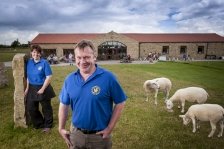
This year we will debut our biomass fuel company, VerdEnergy. Meet Rudie and pick his brains on all things wood fuel related. With his background in the Forestry Commission and many years’ experience in the wood fuel industry he is well equipped to answer any questions.
Now that your renewable technologies have been installed for a few years, it’s time to focus on maintaining them to ensure that your Feed-in-Tariff and RHI payments are secured. We have a comprehensive range of annual service & maintenance plans, extended warranties and competitive fuel contracts.
The Show is running from 12th – 14th July and more details and ticket information can be found here.
You will find us on stand 474 Avenue M North. We’d love to see you.
The big industry news this week is that DECC has undertaken its latest review of the Feed-in Tariff Scheme, the Government’s subsidy scheme for generation of renewable electricity from small scale installations, and yesterday published an open consultation on their findings. This review was expected as the UK is obliged to consult on the performance of the Feed-in Tariff Scheme every three years, with the last review taking place in 2011/2012. As part of this review DECC are also consulting on a range of cost control measures.
The Government reiterates its commitment to meeting EU renewable energy targets set for 2020. However it seems the UK have already met projections, as set out in the 2012 FiTs Review for the deployment of anaerobic digestion, wind, hydropower and expect to meet the deployment target for solar by the end of 2015/2016.
There are two key proposals being considered as part of the consultation to take effect 1 January 2016:
1. Revised generation tariffs in order to control value for money
2. Cap on new FiT expenditure of £75m-£100m from 2016 to 2018/2019 in order to control costs
It’s become a fixed highlight of our annual event calendar and once again Duncan Renewables will be exhibiting at the “Great Yorkshire Show” from Tuesday 14th-Thursday 16th July.
You can find us in our regular spot at Avenue M North where we will be exhibiting a range of renewable technologies including a solar photovoltaic roof install and a solar thermal collector system. Our renewables team will be on hand to demonstrate the technologies and answer any of your technical questions.
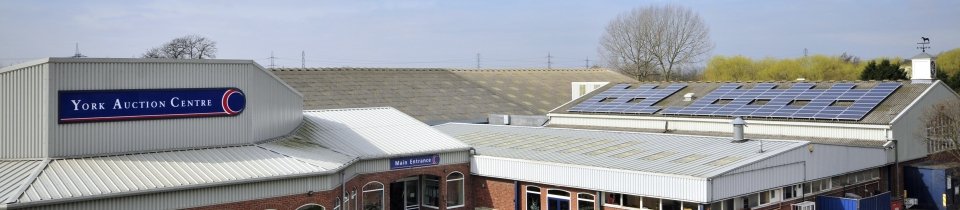
This will be Duncan Renewables’ third appearance at the Great Yorkshire Show, just over 3 years since our team installed 245kW of solar PV across 1,600m2 of roof space at the Showground. Generating an annual output of 203,473kWh units a year, Duncan Renewables are still proud to be helping to power England’s premier agricultural event.
Open daily 7.30am-7.30pm, come and visit us at Avenue M North near the Fashion Pavillion and the Grey Gate.
For ticket information and directions please visit the Great Yorkshire Show Website here.
By 5th December 2015, approximately 10,000 UK organisations (qualified by the Government) will need to confirm their compliance with the mandatory energy assessment scheme, Energy Savings Opportunity Scheme (ESOS). Unlike the energy audits already undertaken by many companies, the ESOS differs in that it should be utilised as a tool to identify energy reduction measures and make energy savings.
Under the ESOS, organisations which are categorised as either large UK undertakings or corporate groups must provide 12 months of verifiable energy data and present recommendations for cost-effective, energy-efficient improvements. Failure to comply or undertake an assessment before the December deadline can result in a fine ranging between £5,000 and £50,000. If just 6% of the identified energy-saving opportunities are implemented, ESOS is estimated to lead to a £1.6 billion net benefit between 2015 and 2030.
How does the scheme work?
The ESOS assessment must cover all UK operations over a twelve month period. It requires participants to do the following three things every four years:
Measure total energy consumption – Consumption should be measured across buildings, trans...
On Tuesday 16th June, we are hosting a ‘Renewables Explained’ open day, providing attendees with the information required to help them make the switch to a cost effective alternative to fossil fuels.
The free-to-attend event, at Mainsgill Farm will be run in conjunction with experts from energy solution providers, Zeco Energy and asset finance specialists, Lombard.
Aimed at homeowners and businesses who are contemplating installing green technologies, the ‘Renewables Explained’ event will mostly focus on the most popular technologies of biomass and solar PV. Presentations will include information on different renewable technologies, financial incentives offered by the Government, project funding options and the impact of upcoming energy legislation changes on businesses. There will also be a tour of Mainsgill Farm’s fully-functioning biomass installation with the opportunity to quiz both the installer and those who operate the boiler on a daily basis.
Mark Duncan, joint Managing Director of Duncan Renewables noted:
“There is a clear desire amongst most people and businesses to adopt renewable technologies, but, more often than not, uncertainty about key principles su...